Agent Design Foundations
Overview
In its most fundamental form, an agent consists of several key components working together to enable intelligent, autonomous behavior. This section explores the foundational elements of agent design and how they interact to create effective agent systems.
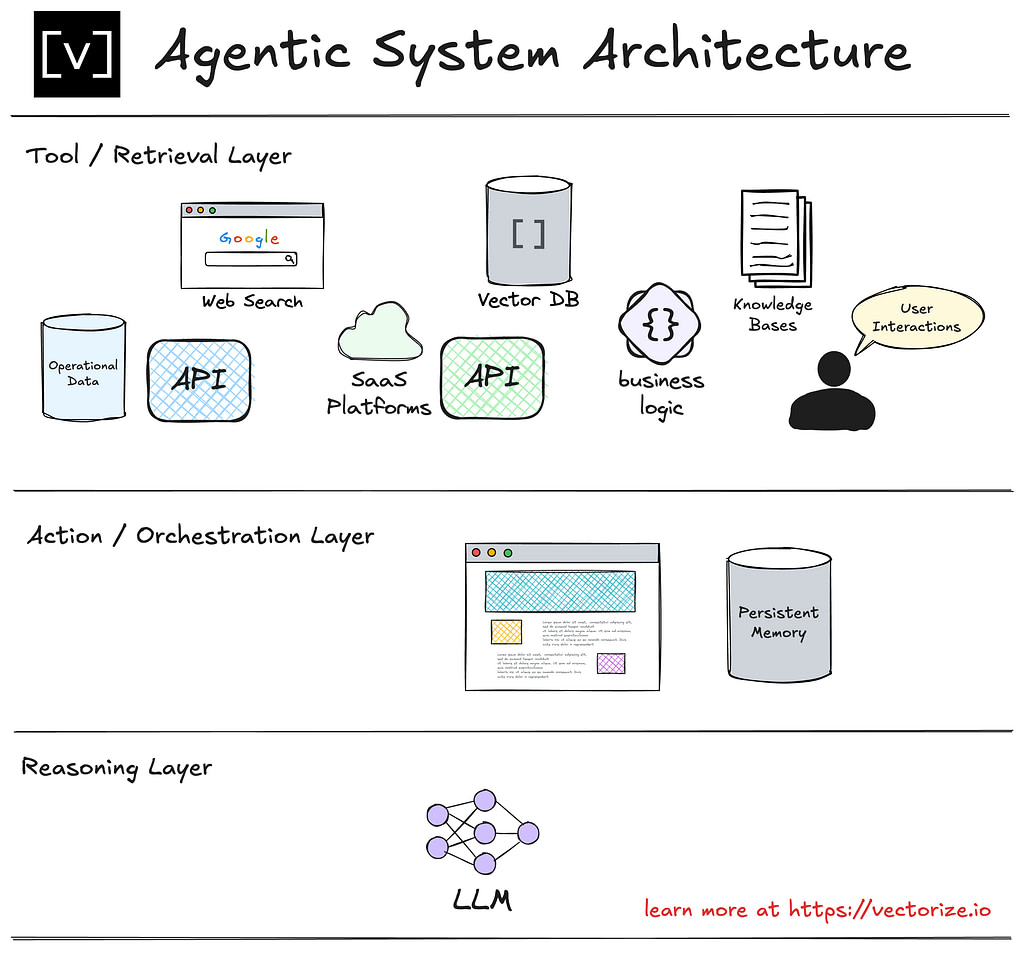
Effective agent design requires careful consideration of each component and how they work together. The following sections explore these components in detail and provide guidance on making design decisions that align with your specific use case.
Key Components
The core intelligence of the agent, responsible for understanding instructions, reasoning about problems, and generating responses. Different models have different capabilities, strengths, and trade-offs that affect the agent's performance.
Key considerations when selecting models include:
- Reasoning capabilities
- Context window size
- Specialized knowledge
- Performance characteristics
- Cost and latency
Tools extend your agent's capabilities by using APIs from underlying systems to perform actions in the world. Well-designed tools should:
- Have clear, specific purposes
- Include detailed descriptions
- Specify required parameters
- Handle errors gracefully
- Return informative results
Tools can range from simple utilities like web search to complex domain-specific functions like database operations or external service integrations.
High-quality instructions are essential for an agent's performance. They define the agent's:
- Purpose and goals
- Capabilities and limitations
- Behavioral guidelines
- Decision-making framework
- Communication style
Effective instructions are clear, specific, and comprehensive, providing the agent with the guidance it needs to operate effectively while avoiding ambiguity that could lead to unexpected behavior.
Orchestration refers to how the different components of an agent system are coordinated and managed. This includes:
- Control flow between components
- State management
- Error handling
- Resource allocation
- System integration
Effective orchestration ensures that the agent operates smoothly, efficiently, and reliably, with components working together seamlessly to achieve the desired outcomes.
Design Areas
Building an effective agent requires careful consideration of several key design areas. Explore each area in depth:
Selecting Models
Choose the right LLMs for your agent based on capabilities, performance, and cost considerations.
Learn MoreDefining Tools
Design and implement tools that extend your agent's capabilities and enable it to interact with external systems.
Learn MoreConfiguring Instructions
Create effective instructions that guide your agent's behavior and decision-making processes.
Learn MoreOrchestration
Coordinate the components of your agent system to ensure smooth, efficient operation.
Learn MoreSingle-Agent Systems
Design and implement systems where a single agent handles the entire workflow.
Learn MoreMulti-Agent Systems
Create systems where multiple specialized agents collaborate to achieve complex goals.
Learn MoreArchitecture Patterns
Different agent architectures are suited to different types of problems and requirements. Consider these common patterns:
Reactive Agents
Reactive agents operate on a simple stimulus-response model, taking actions based directly on their current perception of the environment without maintaining complex internal state or planning ahead.
Characteristics:
- Simple, fast responses
- Minimal internal state
- Direct mapping from perception to action
- Limited reasoning capabilities
Best for:
- Time-sensitive applications
- Simple, well-defined tasks
- Environments with clear stimuli
- Situations where quick reactions are more important than optimal decisions
Example:
A customer service chatbot that responds to specific keywords or phrases with pre-defined answers, without maintaining complex conversation history or reasoning about user intent.
Deliberative Agents
Deliberative agents maintain internal representations of the world, reason about their goals, and plan sequences of actions to achieve those goals. They think before they act.
Characteristics:
- Sophisticated internal models
- Goal-directed planning
- Complex reasoning capabilities
- Memory of past states and actions
Best for:
- Complex problem-solving
- Multi-step tasks
- Situations requiring optimization
- Environments where actions have long-term consequences
Example:
A research assistant agent that analyzes a complex question, breaks it down into sub-questions, researches each one systematically, synthesizes the findings, and presents a comprehensive answer with supporting evidence.
Hybrid Architectures
Hybrid architectures combine elements of both reactive and deliberative approaches, often using a layered structure where different components handle different aspects of the agent's behavior.
Characteristics:
- Layered decision-making
- Combination of fast reactions and deliberate planning
- Flexible allocation of resources based on situation
- Adaptable behavior across different scenarios
Best for:
- Complex, dynamic environments
- Applications requiring both quick responses and strategic thinking
- Systems that need to balance multiple objectives
- Real-world applications with varied requirements
Example:
A personal assistant agent that can both respond quickly to simple requests (like setting a timer) and engage in complex planning for more involved tasks (like organizing a trip), switching between modes based on the nature of the request.
Test Your Understanding
Which component of an agent system is responsible for the core intelligence and reasoning capabilities?
What is the primary purpose of tools in an agent system?
Which agent architecture is best suited for complex problem-solving tasks that require planning and optimization?